




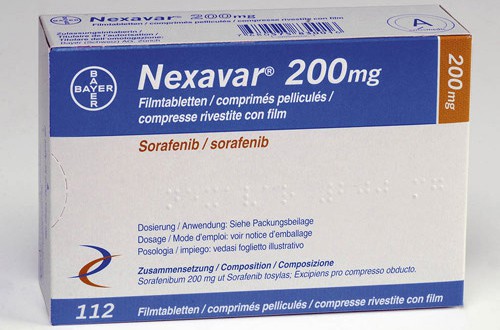
Bayer and Onyx Pharmaceuticals look set to add another indication to the labelling of their oncology drug Nexavar after revealing positive data in a phase III trial in the treatment of thyroid cancer.
Nexavar (sorafenib) improved progression-free survival (PFS) in the DECISION trial, which included patients with differentiated thyroid cancer that would not respond to treatment with radioactive iodine.
Bayer said that it intends to file the data to regulatory agencies to seek approval for Nexavar in these patients, adding to its current approvals in liver and kidney cancer.
The companies are also investigating the drug in a number of other cancers, but suffered a setback last year when Nexavar failed to improve overall survival in patients with advanced non-small-cell lung cancer (NSCLC).
Thyroid cancer is one of the few malignancies that is increasing in incidence and is the sixth most common cancer in women, with about three times as many women as men diagnosed, said the pharma company.
There are more than 160,000 new cases of thyroid cancer and approximately 25,000 people die of the disease worldwide each year.
Like many oncology therapies Nexavar has grown slowly but steadily since its launch in 2006 and racked up an impressive 11.5 per cent increase to €580m ($755m) in the first nine months of 2012.
Latterly much of its growth has come from emerging markets – notably China where use reportedly doubled in liver cancer in 2012 compared to 2011 – and the brand would benefit from new indications to help maintain momentum in established pharma markets.
Bayer and Onyx are also carrying out phase III studies of Nexavar in breast cancer, adjuvant treatment of liver and kidney cancer, with other indications such as colorectal and ovarian cancer following in phase II.